
Government Introduces Comprehensive Nuclear Energy Reform Bill in Parliament
- Tuesday | 16th December, 2025
Vote for BJP in urban local bodies" poll for "triple engine" govt in UP: Adityanath
UP: Man booked for attempting to rape 5-year-old girl
Congress to mark 100 days of Bharat Jodo Yatra with concert in Jaipur
BJYM, Hindu outfits put off planned protest march at AMU
Karachi battles gas crisis; residents face unannounced load shedding, 2-hr gas supply in a day
Elderly man in judicial custody dies during treatment in UP hospital
Himachal Pradesh skittle Haryana for 46, take 200-run lead on Day 1
Pak court grants protective bail to PM Shehbaz"s son Suleman in money laundering case
British Library celebrates India ties with exhibition on Hampi
Nine policemen suspended after suspect dies in police custody in UP
Gangster"s property attached in UP"s Pratapgarh district
Maoists torch construction company vehicles in Jharkhand’s Chatra district
Sino-India border situation "generally stable": China on Yangtse clash
Babar Azam not taking advice from seniors, claims Shahid Afridi
Qlite Global launches their exclusive Grand Experience Centre
"Disillusioned with central leadership": Sikkim BJP president says he has resigned
2001 attack anniversary: Ready to guard new Parliament if directed, say CRPF heroes
Class 2 student dies after scuffle with fellow students in UP
Three killed in accident in UP"s Lakhimpur KheriLakhimpur Kheri (UP), Dec 13 (PTI) Three motorcycle borne youths were killed and "
Abandoned girl child from Assam adopted by Spanish professor
BY Alok Verma
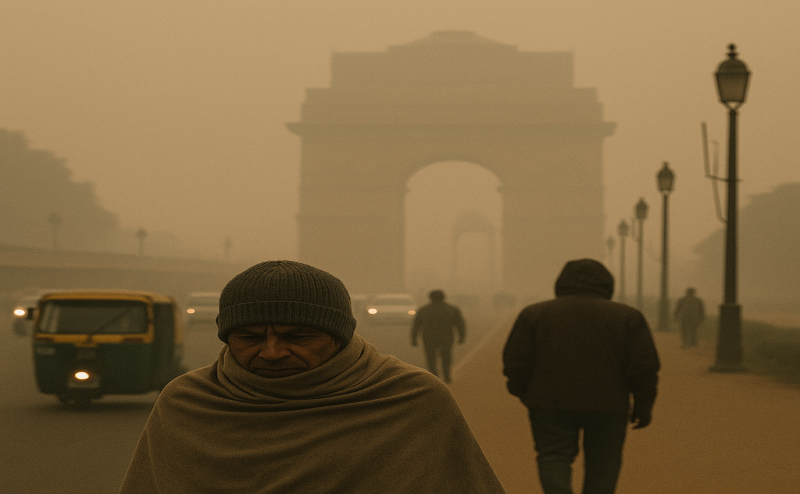
Every winter, the pattern repeats with grim predictability. Dense fog descends on northern India. Visibility drops to near zero on high-speed expressways. Vehicles continue to move as if conditions are normal. Multi-vehicle pile-ups follow. Fires break out. Bodies are burnt. News channels flash visuals of charred buses and twisted metal. Condolences are announced. Compensation is promised. And then the issue quietly fades, until the next winter arrives.
The question that refuses to go away is simple and disturbing: how many deaths must pass and how many bodies must be burnt, before safety becomes policy instead of sympathy.
The winter of 2025 has once again exposed this failure. In mid-December, catastrophic accidents were reported across major expressways. On the Yamuna Expressway, a chain collision involving more than a dozen vehicles killed at least 17 people and injured many more. Several buses burst into flames almost immediately, leaving passengers little chance to escape. A day earlier, a similar pile-up on the Delhi–Mumbai Expressway claimed lives under identical conditions. In Uttar Pradesh, fog-related crashes across expressways resulted in at least 25 deaths in just two days.
These were not freak accidents. They were not sudden or unpredictable. They were the outcome of a known, annual risk that authorities choose not to plan for in advance.
India’s expressways are designed for speed, not for winter safety. They are built to move vehicles quickly in ideal conditions, not to adapt dynamically when fog and smog turn them into death corridors. There are no intelligent fog sensors triggering automatic speed reductions. No lane-level LED guidance systems. No real-time traffic throttling based on visibility. Static infrastructure assumes clear weather even when history proves otherwise.
Equally glaring is the absence of what engineers call “fog engineering.” Reflective road studs, illuminated crash barriers, high-intensity blinkers and fog-visible signage are either missing or poorly maintained. Safety audits focus on construction quality and toll operations, not on operational safety during adverse conditions. Safety begins at inauguration and ends there.
But collisions alone are not what kill most victims. Fire does. In winter pile-ups, especially those involving buses and commercial vehicles, fuel leaks and poorly installed CNG kits turn accidents into infernos. In chain collisions, passengers have seconds, not minutes, to react. Doors jam. Emergency exits fail. Smoke fills the cabin. Fire spreads faster than human instinct can respond.
CNG biggest blind spot
The regulation of CNG kits is one of the biggest blind spots in India’s transport safety regime. Thousands of vehicles operate with unauthorised kits, expired cylinders, substandard valves and poor welding. There is no centralised real-time inspection database. State transport authorities rarely conduct winter-specific audits. Enforcement is episodic and cosmetic. When fires occur, responsibility is diffused across departments until it disappears.
Standard Operating Procedures exist, mostly on paper. Speed restrictions are imposed after accidents, not before fog peaks. Mandatory halts and reduced speed limits are enforced only when public outrage forces action. There is no uniform national winter safety protocol for expressways. No staggered movement of buses. No time-based closures during zero visibility. Prevention remains optional.
The deeper problem is accountability. Highways are owned by the Centre or States. Policing is done by states. Enforcement is fragmented. Safety falls into a grey zone between ministries and departments. When deaths occur, compensation is announced and enquiries are ordered. No official loses a job. No systemic reform follows. Death becomes a statistic, not a trigger for change.

An institutional failure
The victims, more often than not, are the poor. Bus passengers. Daily commuters. Drivers on night duty. People who cannot afford to delay travel or choose safer alternatives. They pay the price of institutional failure with their lives. This is not random tragedy. It is structural injustice.
The media, too, sustains this cycle. Coverage peaks only after graphic visuals emerge. There is little sustained questioning before winter sets in. No serious debates on fog preparedness. No investigations into CNG compliance. Journalism reacts to death, not to risk. Reporting replaces accountability.
India does not lack data. It lacks intent. Winter fog fatalities are known, mapped, and recurring. Yet policy remains reactive. Sympathy substitutes for safety. Compensation replaces reform.
How many winters must pass before this changes. How many buses must burn. How many families must receive compensation cheques instead of answers.
Until safety becomes policy and not a seasonal afterthought, India’s highways will continue to kill quietly, predictably, and without accountability. Winter after winter.

Your support to NYOOOZ will help us to continue create and publish news for and from smaller cities, which also need equal voice as much as citizens living in bigger cities have through mainstream media organizations.